Your website doesn’t need a redesign every few years to stay effective. In fact, some of the most impactful digital work we see in the arts and culture sector comes from smaller, focused projects that solve a specific problem — a page that isn’t converting, a transaction that’s eating up box office time, a user journey that’s creating friction instead of removing it.
The key is treating your website like a living thing that needs regular care, not a one-and-done project that sits untouched until the next big rebuild. With the right data and a clear problem to solve, a targeted investment can deliver outsized results — and keep your site feeling current for much longer.
Start with a problem, not a solution
Our successful smaller projects always start with a larger problem the client wants to solve: losing people in the sales funnel, subscription sales numbers, staff spending too much time on routine tasks or transactions. There are many ways to solve these problems with small, iterative web changes, and your digital agency can help come up with the right solution based on your organizational priorities and budget if you start your approach with a concrete problem in mind.
Narrow down your goals with data
Once you have the larger problem in mind, asking the right questions of your analytics data can help narrow down the details of a project. Google Analytics is the obvious place to identify audience behavior and find your highly trafficked pages that are worth greater investment. But there are other channels that can provide insight into what your patrons are doing (and not doing) on your website. Your CRM can tell you the routine issues that are taking up box office time, session recording tools like Hotjar and Mouseflow provide insight into user behavior, and your internal site search can reveal pain points in your site architecture. Where are your patrons getting frustrated, and what are they having trouble finding? Small changes to the UX or the structure of key pages can have a huge impact.
Bring in your agency
Your digital agency can help analyze your data and come up with a workable solution to the problem you’ve identified based on your goals, priorities, and budget. There are a lot of ways to increase revenue, decrease audience frustration, and introduce new self-service features. Staff at a good agency have experience working with different clients who are facing similar issues and have probably already solved them in a creative way.
Mini case study: improving Minnesota Orchestra concert pages
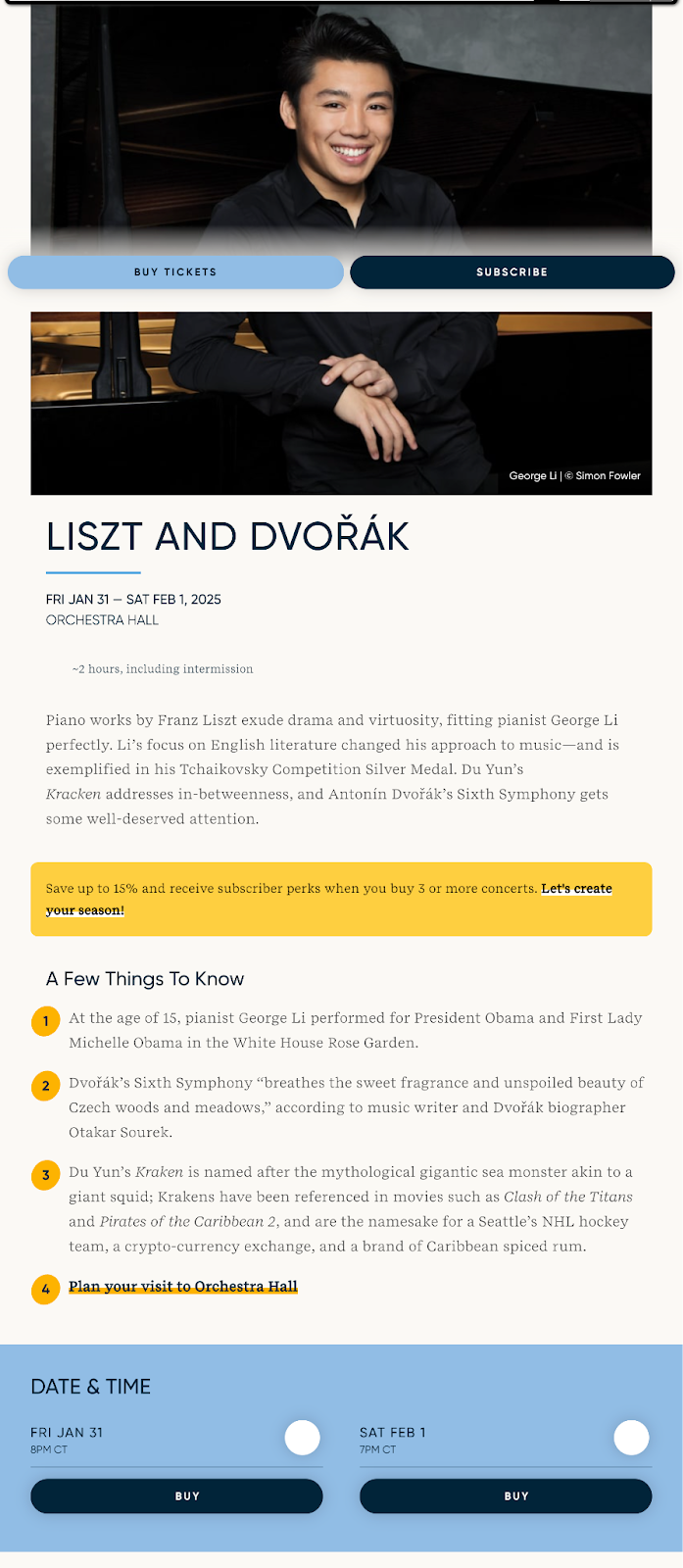
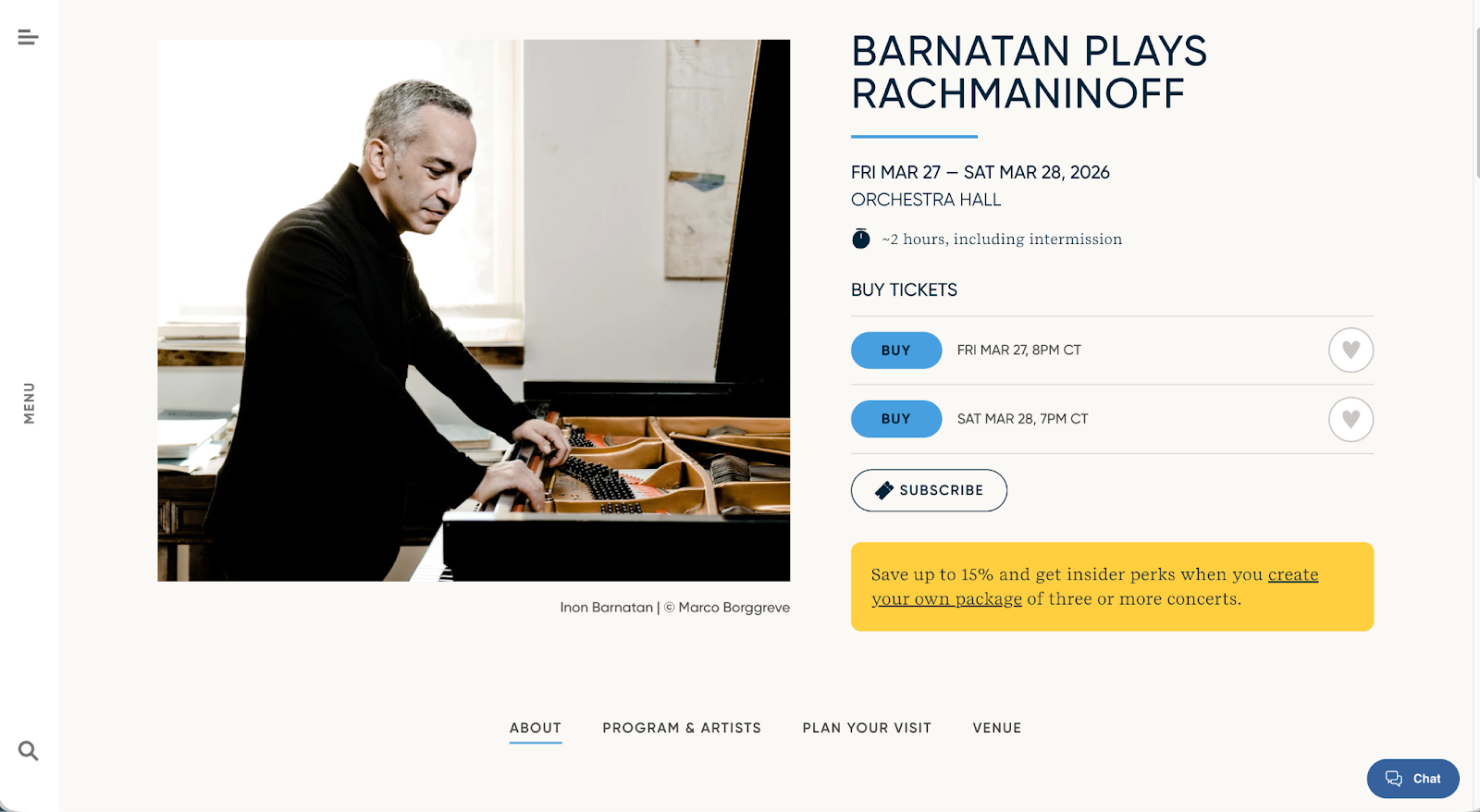
The Minnesota Orchestra has been a Made Media client since 2018, and in 2025 they decided to use their annual digital budget to improve single ticket conversions online. The site feels fresh and represents their brand well, so a large redesign wasn’t on their radar; they reserve a portion of their budget each year to keep their digital presence relevant.
The Orchestra staff knew from their analytics that concert pages had some of the highest traffic on the site, primarily from users who had seen marketing materials and were ready to purchase a ticket. Originally these pages were designed to sell a concert to a potential patron who hadn’t yet decided to buy; the Buy Tickets buttons were buried under several pieces of supplemental content. But their other marketing channels — video content, ads, email, brochures — do the sales work for them. Not only were their concert pages not serving their purpose, they took a lot of staff time to build each year.
The concert page’s design needed to shift to suit its true role: as a transactional landing page at the end of the marketing funnel to help patrons buy a ticket seamlessly. With the amount of traffic on these pages, a small design refresh had a big impact. We removed the clutter, surfaced the Buy Tickets button and made it more prominent on mobile devices; their team also streamlined their marketing copy and focused on answering the main questions that ticket buyers have.
Case study: Wales Millennium Centre’s new self-service features
Like arts organizations around the world, the Wales Millennium Centre was hit hard by the pandemic. They lost a large portion of their box office staff but wanted to maintain the high level of customer service they were known for. The solution was to invest in new digital features to allow patrons to complete routine transactions online, with an emphasis on a quality user experience.
The Wales Millennium Centre team created a multi-year roadmap informed by box office data and staff and patron feedback, which focused on exchanges and group sales booking. We worked with them to build new journeys and adjust their business practices to better serve audiences online, and the results are remarkable.
After the first three years 81% of their exchanges were completed online, freeing their staff up to handle more complicated transactions for patrons over the phone. About 59% of group sales transactions are online now as well, amounting to about 27,000 group transactions each year. The project paid for itself within the first year, and the ROI has continued to rise since then.
Small project or redesign?
Sometimes a redesign is necessary to accomplish your goals. When your organizational identity or structure goes through major changes, when your CMS platform becomes outdated and hard to use, or when a rebrand necessitates a total rebuild of every page, a small project isn’t going to be the right fit — you can’t put bubblegum on a dam, as we like to say. But regular refreshes of key pages or new feature builds can keep a site fresh and healthy for much longer.